
Wes Huff created a whirlwind of activity this week when he told the world what I’ve heard a long time as a Baptist. The Greek words translated “elder”, “bishop”, and “overseer” are interchangeable. They are three different words to describe the same office. Roman Catholics and Orthodox folks got a little fiery in response. But he’s correct. And it’s obvious.
Before people get all gripey about this, you do this every day. My children have called me “Dad”, “Daddy”, “Pops”, and “Old Man” all in the same day. And I did not imagine them to be speaking of four different people.
Why Don’t You Prove It?
I am glad you asked me to prove it. I would love to. I simply hate unsubstantiated claims.
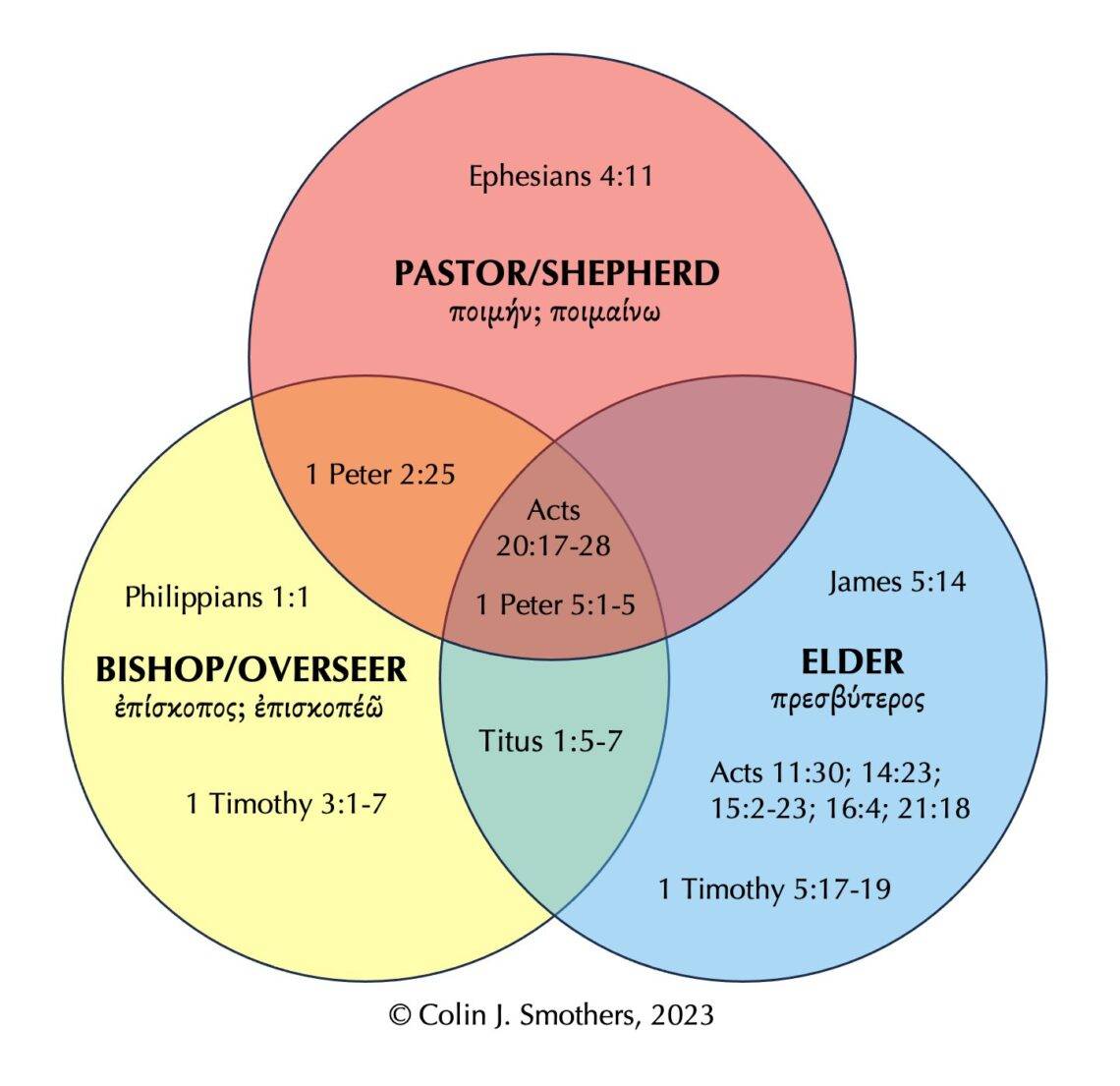
In Acts 20:17-38 Paul speaks to the elders at Ephesus and tells them that God made them “overseers” and tells them that they are to “shepherd” the church.
17 Now from Miletus he sent to Ephesus and called the elders of the church to come to him. … 28 Pay careful attention to yourselves and to all the flock, in which the Holy Spirit has made you overseers, to care for the church of God, which he obtained with his own blood. [Act 20:17, 28 ESV]
The word for “elders” is πρεσβυτέρους or “presbuteroos”. That is the group that Paul is speaking with in Acts 20:17. Then in verse 28, Paul says that the Holy Spirit made them “overseers” ἐπισκόπους ” “episkopoos”. And he stated that there role was to “care for” or “shepherd” or “pastor” “ποιμαίνειν”. The definition of that word is “to shepherd”.
In summary, Paul used all three of these words interchangeably to the same group of people in the course of this one conversation. And what does this tell us but that all three of these words speak of the same office “Pastor/Elder/Bishop/Presbyter/Overseer”. They’re the same thing.
Paul does the same thing in Titus 1:5-9. In his description of elder qualifications. Again, Paul uses the word for “elders” “
πρεσβυτέρους” and then the word for “overseer” “
ἐπίσκοπον”.
5 This is why I left you in Crete, so that you might put what remained into order, and appoint elders in every town as I directed you– … 7 For an overseer, as God’s steward, must be above reproach. He must not be arrogant or quick-tempered or a drunkard or violent or greedy for gain, [Titus 1:5, 7 ESV]
Again, this should tell us that Paul does not understand there to be multiple offices, just one.
And Paul was not the only person to do this. Peter does the same thing in 1 Peter 5:1-2.
1 So I exhort the elders among you, as a fellow elder and a witness of the sufferings of Christ, as well as a partaker in the glory that is going to be revealed: 2 shepherd the flock of God that is among you, exercising oversight, not under compulsion, but willingly, as God would have you; not for shameful gain, but eagerly; [1Peter 5:1-2 ESV]
It is the same thing here with Peter. He speaks to the elders ” πρεσβυτέρους”. He them to “shepherd” or “pastor” ” ποιμάνατε” and exercise “oversight”. Rather than calling them and overseer, he calls upon them to oversee. This is virtually the same thing.
I ran across an image from Collin Smothers that depicts this quite nicely. He did a wonderful job of showing the usages of these words in the New Testament. And it does a beautiful job of proving the point I’ve been blabbering on about for the last few paragraphs.
This Simplifies Things
Jesus founded the Church. The Apostles went forth with the gospel and established the Church. And when they did so, they created two offices: Pastor and Deacon.
Over time, people added to these two offices. As Huff noted, separating these into different offices came later. And, as I mentioned in my last post, there’s no mention of the office of Pope in there either.
I just had to throw that in there because it’s almost Reformation Day.


Leave a Reply