
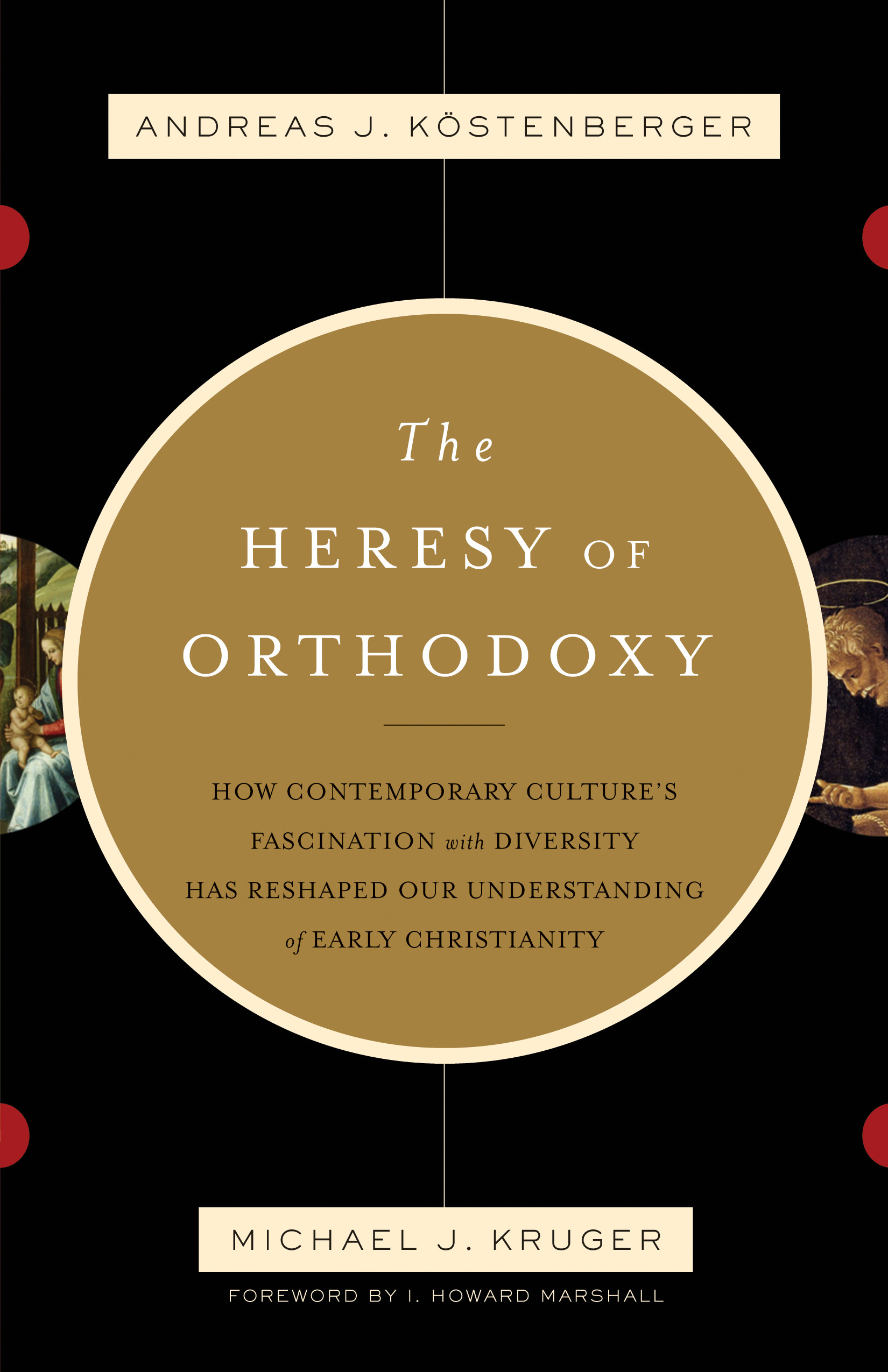
The hypotheses of men like Bart Ehrman have made it necessary for evangelical scholars to deal with modern accusations concerning the Canon of Scripture. The accusations receive a lot of media, seemingly without any skepticism concerning what they say. This means that the answers to the doubts raised by men like Ehrman need to be published for the world to see. That is what we find in The Heresy of Orthodoxy.
Kostenberger and Kruger do an incredible job of answering modern accusation that the beliefs of the Early Church were quite diverse. The claim is that it wasn’t until the 4th century that what we claim to be orthodox actually was solidified. But, Kostenberger and Kruger take a look at the information we have within Scripture itself, and from the writings of the Early Church to show that these claims are not at all based in history, but rather are conjectures that ignore the historical data.
I don’t believe that the importance of this topic can be overrated. Around Christmas and New Year every year these ideas are broadcast on television. This idea, called the Bauer thesis, is growing in popularity and panders to our culture’s mindset. In a time and place where the very idea of truth is considered ludicrous, even a thesis based upon conjecture that lacks historical backing will be very appealing. And so, if we are going to actually understand what is going on with media darlings like Bart Ehrman, then we need to investigate his claims. That is exactly what the authors do in this book.
Kostenberger and Kruger take a look a historical look at the claims of diversity of the Early Church. First they look to see just how diverse the Early Church actually was and whether or not the claims of the Bauer thesis are true. The insights gained from this are quite remarkable. It reveals that the Bauer thesis is simply not true. The authors also take a look at the idea that the canon was wide open until around the 4th century and reveal that from very early on, even before 100 AD, the canon was in a sense closed admitting only certain works to be called Scripture. And, they also do a very good job of looking at the reliability of the New Testament texts. Here Bart Ehrman seems to again not be dealing in historical reality, but rather his own conjectures from faulty logic. The authors show that we really can trust the Bible that we have today.
If you are a person who is curious about historical Christianity and the reliability of the New Testament texts, which is a topic that comes up often, then I think you would do well to read this book. I would also argue that if you are a pastor or other leader in your church, you would do well to read and understand the topic of this book. Because the media has loved to move these ideas into the limelight there are many people in our congregations who likely have questions concerning this topic.
R. Dwain Minor


Leave a Reply